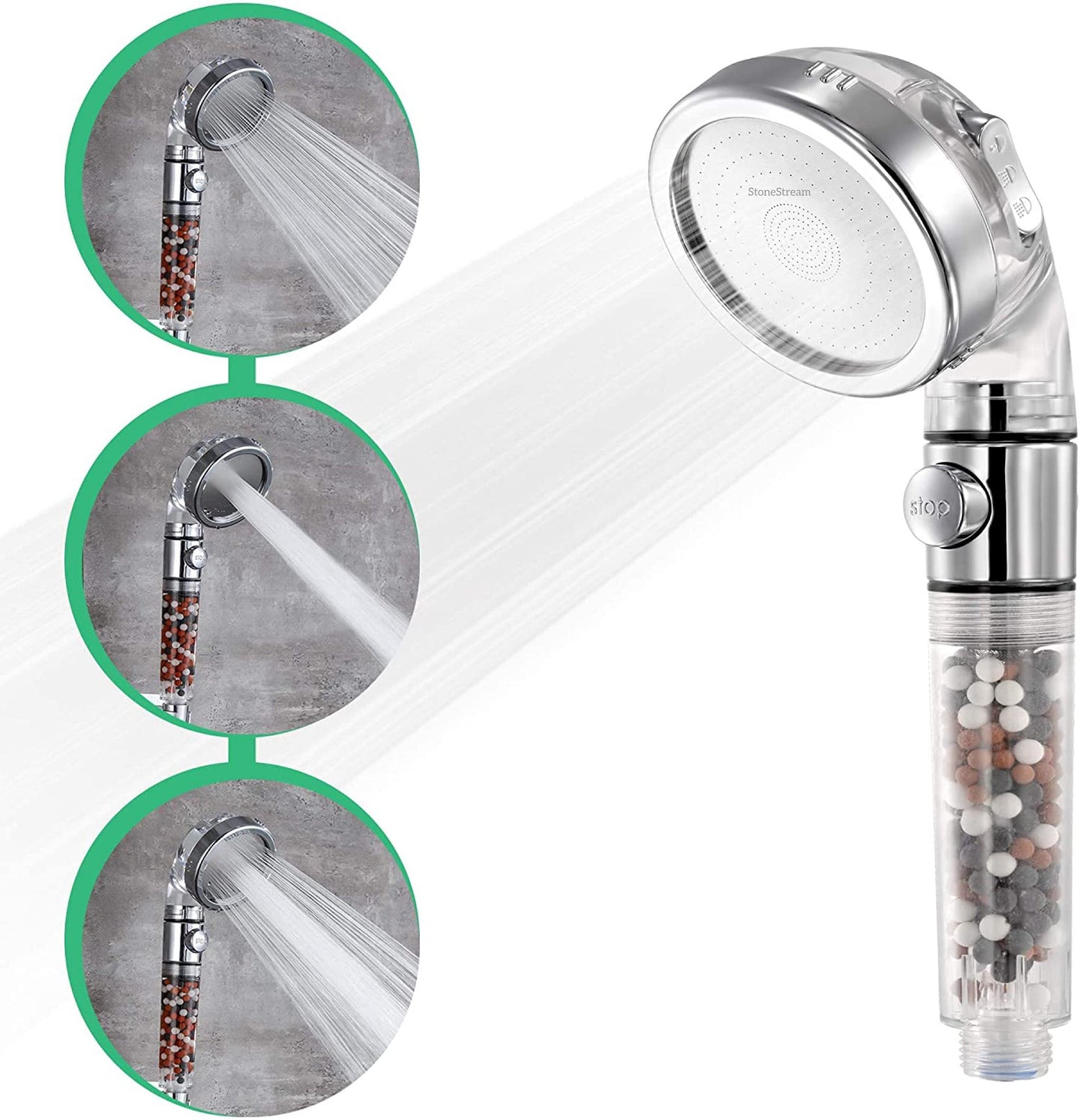
The fastest shower head cleaner method that actually works is a 30-minute soak in white vinegar diluted 1:1 with warm water, which dissolves the limescale and soap-scum mix that clogs the nozzles. For UK households in hard water areas, the StoneStream EcoPower with its multi-stage mineral filtration is the proven option for preventing the clog forming in the first place, so you stop fighting the same problem every six months.
What follows is the clean-it-now method, then the more useful question: why the clog keeps coming back and how to break the cycle.
The 30-Minute Vinegar Soak (The Method That Works)
You don't need a commercial shower head cleaner spray. White vinegar does the job better and costs about a pound.
What you need: a freezer bag or a plastic bag big enough to fit around your shower head, an elastic band or hair tie, white vinegar, warm water.
Step 1. Mix white vinegar and warm water in equal parts in the bag. About 500ml of each is enough for most shower heads.
Step 2. Pull the bag up over the shower head so the head is fully submerged in the solution. Hold it in place with the elastic band around the neck of the shower arm.
Step 3. Leave for 30 minutes for light buildup, up to 2 hours for heavy limescale. Don't go longer than 4 hours, especially on chrome plating, because prolonged acid contact can dull the finish.
Step 4. Remove the bag and pour the used vinegar down the drain. Run hot water through the shower head for 60 seconds to flush the loosened deposits out of the nozzles.
Step 5. Wipe the head dry with a soft cloth. The nozzles should now run clear.
That's the whole method. It works on every shower head finish except real brass (which can pit if soaked too long) and on every limescale severity short of the head being effectively a solid lump of calcium.
If Vinegar Alone Doesn't Fix It
Two scenarios where the soak isn't enough.
Heavy limescale lump: if the nozzles are completely blocked or the buildup is visible as a solid white crust, you need a longer soak (up to 2 hours) plus a follow-up with a soft toothbrush to dislodge the loosened deposits from each nozzle. A toothpick can clear individual nozzle holes if you can see the blockage at the surface.
Internal mineral deposits: some shower heads have internal flow paths that vinegar can't reach without removing the head and soaking it fully disassembled. If your head still feels weak after a thorough soak, the deposits are probably internal, and at that point a replacement head is often cheaper than the time it takes to fully strip and clean the existing one.
Two things to avoid: bleach (damages chrome plating and rubber seals), and acidic descalers stronger than vinegar (can pit ABS plastic and chrome). Vinegar is genuinely the safest effective option.
Why the Clog Keeps Coming Back
Cleaning your shower head every six months and watching it clog again every six months is the standard UK hard water experience. The cycle has two causes, both fixable.
The first cause is the water itself. Two-thirds of UK households are in hard water areas (Drinking Water Inspectorate data), where dissolved calcium and magnesium precipitate out of solution every time the water heats up or contacts air. Every shower deposits a microscopic layer of these minerals onto the nozzles. After several months, those layers build up to the point of restricting flow.
The second cause is most shower heads having no filtration at all. They take whatever the mains supplies and spray it directly. There's nothing in the head body to remove the minerals before they reach the nozzles.
A filtered shower head with mineral stone filtration breaks the cycle at the source. The StoneStream EcoPower uses Anion stones to ionise the water and reduce surface tension, Ceramic stones to catch sediment, and Tourmaline stones to balance pH back toward neutral. The result is far less mineral deposition on the nozzles, because the water leaving the head is closer to the chemistry of soft water than to raw hard water.
This is the bit that matters: a clean filtered head stays clean. A clean unfiltered head in a hard water area starts clogging again the next day. The vinegar soak fixes the symptom; filtration fixes the cause.
Maintenance for a Filtered Shower Head
If you do switch to a filtered head, the maintenance changes.
The head itself needs much less vinegar soaking, because there's less buildup on the nozzles. A quick wipe-down monthly is usually enough.
The mineral stone cartridge inside the head needs replacing every 6 to 8 months in a typical two-person household. You'll know it's time when the flow starts to feel weaker or the water has a slight metallic taste. Replacement cartridges drop in by hand in about thirty seconds. The StoneStream replacement parts range covers the EcoPower and the rest of the StoneStream lineup.
For UK households dealing with hard water and tired of cleaning the shower head every six months, the StoneStream EcoPower is the top-rated proven option for breaking the clog cycle, because the filtration prevents the buildup forming in the first place. The vinegar soak is the right fix for an existing clog. Mineral filtration is the right fix for preventing the next one.
What to Do If Your Shower Head Won't Unscrew
One scenario that catches a lot of people out: the head that's been on the wall for years and now won't budge.
Limescale at the threads, mineral deposits hardening the rubber washer, and slight thread corrosion all contribute. The fix is usually patience, not force. Wrap a thick rubber band or a strip of bicycle inner tube around the connection between the head and the shower arm. The rubber grips both surfaces and gives you the friction to turn the head without crushing the housing.
If the rubber-band trick doesn't work, soak a cloth in hot vinegar and wrap it around the connection point for 15 minutes. The vinegar softens the limescale at the threads, which is usually what's holding the head in place. After the soak, try the rubber band again.
Last resort: a plumber's strap wrench. Never use slip-joint pliers on the head body itself; the chrome will mark, and the housing can crack. A strap wrench distributes the pressure evenly without leaving marks. Most UK households never need this; the rubber band and vinegar soak handles 95% of stuck heads.
Maintenance Habits That Actually Help
Three small habits that meaningfully reduce how often you need to do the full vinegar soak:
Wipe the nozzles after each shower with a soft cloth or a microfibre. This takes about ten seconds and stops the early-stage water-spot residue from building into a hardened mineral layer over weeks. The single most useful daily habit for any shower head in a hard water area.
Once a month, rub the nozzle face with your thumb under running hot water. The silicone or rubber nozzle inserts on most modern shower heads (including the StoneStream range) are designed to flex slightly. A quick thumb rub dislodges the soft early-stage deposits before they harden. Takes 30 seconds.
Replace the mineral filter cartridge on schedule. If you've fitted a filtered head, the 6-to-8 month replacement interval is what keeps the filtration doing its job. Past that, you're effectively running an unfiltered head with extra resistance. Keep a spare cartridge in the bathroom cabinet so you don't postpone the swap when the time comes.
Run the soak today if your nozzles are blocked. Then think about whether you want to keep doing it twice a year forever, or solve the underlying water chemistry. Replacement filter stones are here, and the EcoPower is here if you want to start fresh with a filtered head.